
Wedderburn
What is Scale Calibration and How Often Should I Calibrate my Scale or Balance?
Kate Wedderburn
11th November 2025
If your business relies on weighing equipment—whether it’s for manufacturing, retail, logistics, or healthcare—then regular calibration is an essential part of ensuring your scale or balance remains accurate over time.
In this article, we’ll explain:
- What calibration is
- Is Calibration the same as Adjustment
- Is Calibration the same as Verification
- Who should perform a calibration
- What an accredited tester does
- How often should you calibrate your scale or balance
- The risks of skipping calibration
- Why Wedderburn is the ideal service partner
- How can Wedderburn help
About Wedderburn
Founded in 1896, Wedderburn has been supplying Australian businesses with quality equipment for almost 130 years. Wedderburn specialise in Weighing Scales, Labels, Labelling Equipment, Packaging Equipment, POS Systems, Electronic Shelf Labels and Food Equipment. All our equipment is supported by our nationwide service network. We can support your business no matter where you’re located.
What is Scale Calibration?
Calibration of a weighing device is a test process of applying known weight values and comparing the displayed results. The purpose of the Calibration is to understand the performance of the weighing device.
Is Calibration the same as adjustment?
Importantly, calibration is not the same as adjustment. Adjustment changes how a device performs. Calibration is a prerequisite to adjustment, so that it’s understood if adjustment is needed.
Is Calibration the same as verification?
No, verification is conducted on a ‘Trade approved’ weighing device using the NMI prescribed test procedure. For Verification to be completed, both calibration and adjustment (if needed) must be done.
Ready to Book a Calibration?
Who Should Perform a Calibration?
While anyone can place a weight on a scale or balance to check the display reading, that’s not sufficient for all business or regulatory purposes.
Where accuracy is important or where test documents are required for auditors, calibration should be performed by an accredited tester.
You may require an accredited tester to perform calibration if you:
- You operate in sensitive industries like healthcare or manufacturing where your operations depend on weight-based decisions (e.g. dosage, production, compliance)
- Are trading by weight
- Have weighing devices that are audited
What Does an Accredited Tester Do?
Inspection will be conducted to ensure weighing device suitability before moving on to Calibration testing. Then Calibration is performed by placing loads made up of certified standard masses on the weighing device and the weight reading for each load is recorded.
Several tests are also performed during a calibration, including (but not limited to):
- Eccentricity tests (same weight placed at different positions at a defined load value)
- Repeatability tests (same weight applied multiple times at a defined load value)
- Weighing Performance tests (different loads applied throughout the device’s weighing range to determine overall performance)
If the weight reading displayed matches the known weight of the load, or falls within the accepted tolerance, then no adjustment is required. If the reading is outside of the accepted tolerance, then adjustment is performed. Weighing device marking and documentation would then follow.
How Often Should Scales or Balances be Calibrated?
Calibration frequency depends on several factors:
Manufacturer’s recommendations
- A manufacturer may recommend specific time frames for calibration
Frequency of use
- Light use (weekly or less): Annual calibration may be sufficient
- Heavy use (daily or shift-based): More frequent testing may be required
Environmental conditions
- Temperature fluctuations, vibration, static electricity, dust, and humidity can all affect accuracy
Application criticality
- In regulated industries (e.g. food production, pharmaceuticals), frequent calibration may be mandatory
Certificate requirements
- The type of certificate required for your business and/or QA processes.
Wedderburn’s recommendation: Calibrate at least once per year—and more often if precision is business-critical.
What Are the Risks of Skipping Calibration?
Failing to calibrate and if required, adjust your weighing devices can have serious consequences:
Financial Consequences – Overcharging or undercharging customers can lead to fines or lost revenue.
Inconsistent Product Quality – Incorrect weights can impact product quality and reputation.
Legal risk – Non-compliance with trade measurement laws.
Health risks – In medical settings, inaccurate weights can affect diagnoses or medication dosage.
How Can Wedderburn Help?
With over 125 years of experience in the weighing industry, Wedderburn is your trusted partner for servicing and calibration. We offer:
✅ Nationwide service – 19 branches across Australia ensure we can service your equipment wherever you’re located
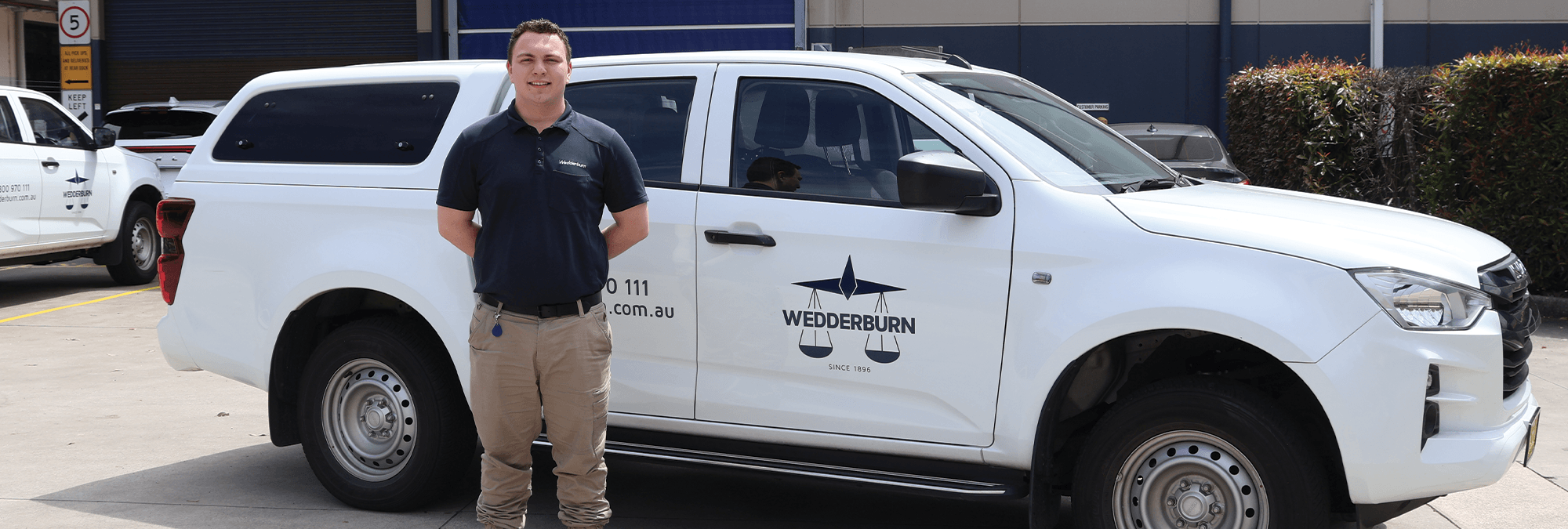
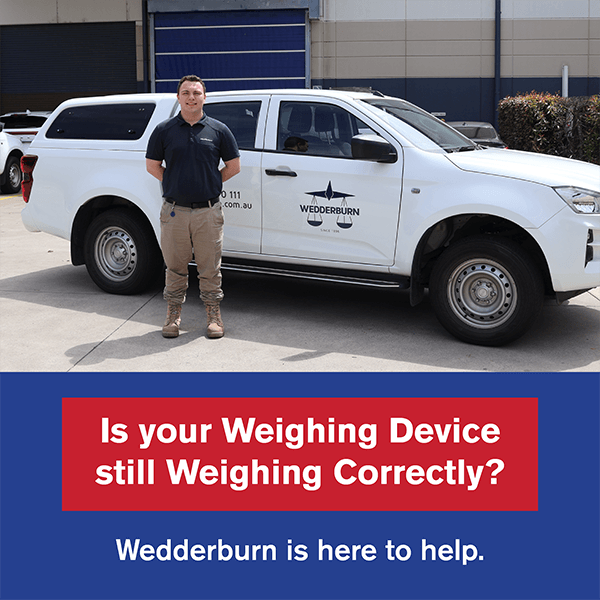
✅ Expert technicians – Fully trained mobile fleet, up to date with industry regulations
✅lexible options – One-off calibration jobs or preventative maintenance (PM) plans
Whether you’re a small retailer, medical practitioner or a large manufacturer, we have the right service offering to suit your business.
Book Your Calibration Today
Stay compliant, protect your reputation, and keep your equipment running at peak performance.
Contact us on 1300 933 337 or submit a service request via our enquiry form.
Let’s make sure your weighing devices are working as hard—and as accurately—as you are.
Related News